How to find your airbag ECU part number
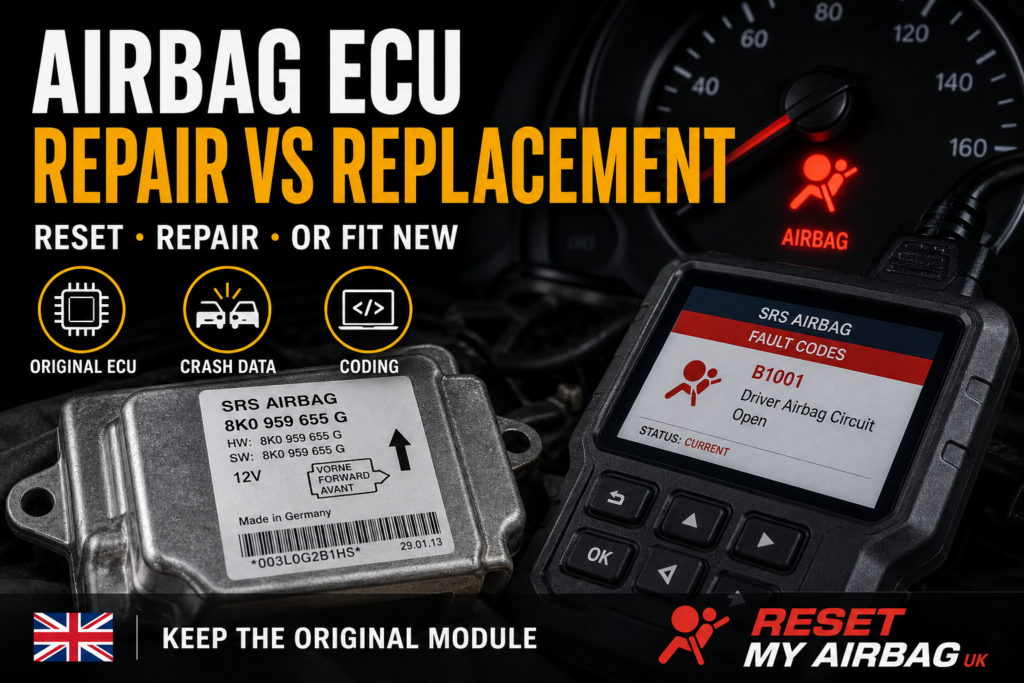
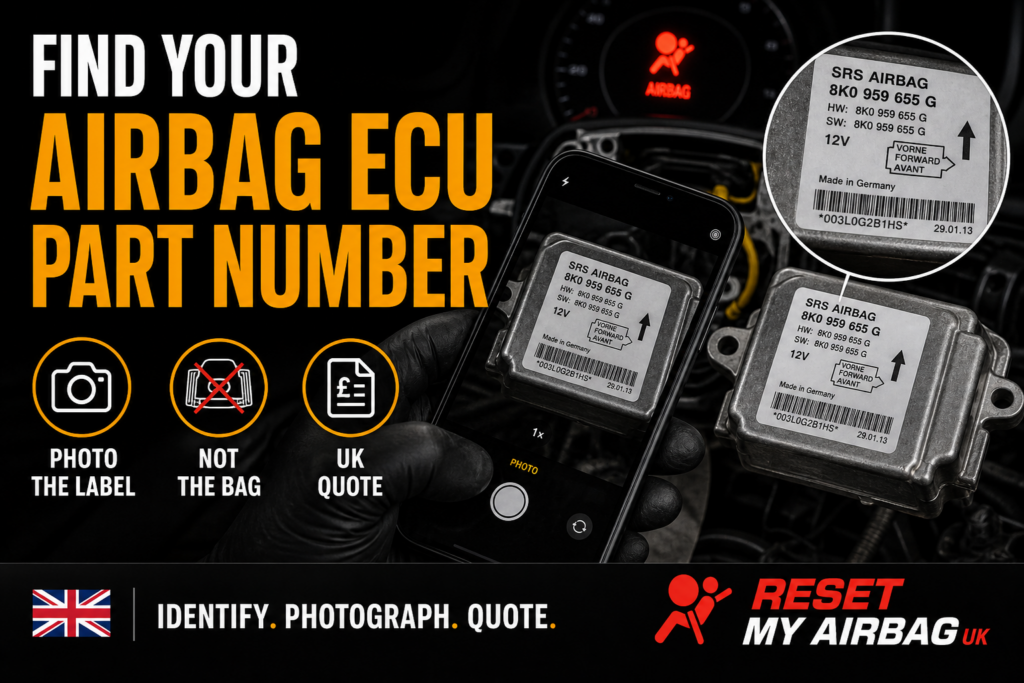
How to Find Your Airbag ECU Part Number (UK Quote Checklist) | Reset My Airbag Home / Blog / Airbag ECU part number Quote checklist · UK postal · East Grinstead How to find your airbag ECU part number Published 27 August 2026 · Reset My Airbag, East Grinstead, West Sussex Direct answer: The number that matters is on a sticker on the SRS control module — the metal or plastic ECU in the car — not on the airbag in the wheel. Photograph the whole label square-on, send it with the registration, and we can quote a reset or repair. “It’s a 2016 Golf” is not a part number. Two cars that look identical often use different hardware. Key takeaways Quote the box in this vehicle, not a listing photo or a mate’s car. Registration helps; the label confirms it. Blurry photos waste a day. All digits, barcodes and indexes must be readable. Manufacturer pages list coverage — still send the sticker from your unit. On this page Where the ECU usually sits What to photograph What to send for a quote FAQs This is the identification page. It is not a crash-data explainer. For reset vs replace see repair vs replacement. Brand coverage: makes and models. Where is the airbag control module? It is a small control unit with a multi-pin connector, usually a printed label on the case. Typical locations (always confirm for that VIN / workshop data): under a front seat (very common) centre console / transmission tunnel passenger footwell / kick panel behind dash trim on some platforms It is not the clock spring, not the bag in the wheel, and not the crash sensor in the bumper. Disconnect the battery and follow SRS precautions before you lift seats or trim. If you are not set up for that, get a garage to photograph the label in situ. What the part number looks like — and how to shoot it On the sticker Why we need it Main OEM part number (often 10+ characters) Hardware family — reset compatibility Hardware / software index, 01 / 02, dash numbers Same “part” can be a different board Barcodes Backup if a digit is misread Make logos (Bosch, Autoliv, Continental, etc.) Supplier, not a substitute for the OEM number Photo rules that actually get a quote back the same day: whole sticker in frame, no flash glare, no thumb over the number, taken after wipe if the label is dusty. One close-up plus one of the whole ECU (connectors visible) is better than five unreadable shots. Do not copy a number off a used module you have not fitted. Do not invent a number from a parts catalogue “that looks right”. What to send Reset My Airbag Registration (and make/model/year if the VRM is new or personal) Clear photo of the ECU label Whether bags or pretensioners deployed, if known SRS codes if you have already scanned We quote by email or text from East Grinstead. Compatible crash-data work starts from £95. The module is posted in, worked on the bench, posted back tracked. Label photo + registration is enough to start. No booking until you accept the price. Get a quotation Frequently asked questions Where is the airbag ECU part number? On the SRS control module sticker in the vehicle. Not on the steering-wheel bag. Is the registration enough? It helps. The label is what we trust when the same model has more than one ECU. The sticker is damaged — can you still quote? Send the best photo plus registration and scan codes. Coverage may still be possible; some units need sight of the board. Should I send the module before you quote? No. Identify first. Post after you accept the quotation. Related Manufacturer part lists Can the module be reset after a crash? Get a quotation
How to find your airbag ECU part number Read More »